(c) Bob Hulsey
As they had lost their best pitcher the year before, the Astros would have to make due without Randy Johnson. The free agent signed with Arizona, leaving Dierker to once again rebuild his pitching rotation. Chris Holt, who was injured all of last season, won back his starting job.
Jose Lima boasted that he would win 20 games. The emotional righthander had made a lot of noise both on and off the field. His gyrations and antics on the mound angered opponents who thought he was disrespectful, particularly after strikeouts. The awkward rally caps and bat banging in the dugout made some wonder if he was mentally fit. He and teammate Mike Hampton shared kisses after wins. Off the field, Lima's Latin CDs sold well. His T-shirts proclaimed "It's Lima Time!". The man is obviously not shy. As the saying goes, it's not bragging when you can back it up and Lima did one better with a 21-10 record along with a 3.68 ERA.
The Dome's final season was billed as "A Year To Remember" but nobody knew just how true the marketing slogan would be. A season marred by illness and violence, it was also one that riveted fans until the final out. The Astros said goodbye to the Astrodome in memorable fashion.
Slugger Moises Alou would miss the entire year with a knee injury but Ken Caminiti returned from San Diego to fill the power void in the lineup. The still-popular Caminiti, however, would miss two months with a mysterious leg injury. Rookie Mitch Meluskey, for whom Houston traded Brad Ausmus in order to work him into the lineup, was out for the year after just ten games with a shoulder injury.
On their last Opening Day in the Dome, the Astros began their campaign with a 4-2 victory over the Cubs. Shane Reynolds got the win. In retrospect, every triumph the team celebrated that year would have meaning, not just for posterity but for the present. Houston bats broke out on May 11th with a 19-8 mauling of Pittsburgh to tie the club record for most runs in one game. Seven Astros joined in with multi-hit games.
Jeff Bagwell continued to erase Jim Wynn's name from the Houston record books. He smashed three home runs against the Cubs on April 21st, driving in six runs during a 10-3 triumph. He surpassed Wynn's club mark of 224 career homers that day. Bagwell had another three-homer night on June 9th during a 13-4 drubbing of the Chicago White Sox. On the season's final day, Bagwell would break the team's single-season record for walks in one year with 149, bettering Wynn's mark by one. Jeff got six free passes in one night during a 16-inning victory over Florida on August 20th. For the year, Bagwell would lead the team with 42 homers, 128 RBIs, 30 steals and 143 runs scored while hitting .304.
The Astros fended off early challenges from the Cubs and Reds and appeared to be building a lead in the Central Division when tragedy struck on June 13th. In the eighth inning against the Padres at the Astrodome, play was stopped when manager Larry Dierker collapsed in the dugout and began convulsing uncontrollably. Hospitalized, doctors found a jalapeno-sized blood and tissue mass in his brain that had to be removed. Dierker was gone from the team for a month. The easy-going skipper was thankful to be alive.
The Reds came to town later that month and swept a four-game series to move into the division lead. With Alou and Caminiti out, Carl Everett stepped up his game. During the return trip to Cincinnati, Everett switched around on lefthander Steve Avery and homered to pace a 5-3 victory on a steamy July 4th. The Astros left with a four-game split. Everett led the club with a .325 average, powering 25 homers, driving in 108 runs and stealing 27 bases while filling the cleanup spot behind Bagwell.
Dierker returned to the team after the All-Star break and his club responded with five straight wins. Injuries began to pile up, though. Pitchers Sean Bergman and Doug Henry were disabled. Everett, Richard Hidalgo, Derek Bell and Ricky Gutierrez were on the mend too. Dierker was thankful for the versatile Bill Spiers who played seven different positions during the year. The outfield was so in need of able bodies by August that Spiers and Craig Biggio manned the outfield at times while rookie reserve Glen Barker patrolled in center. The Astros brought up two hot-hitting minor leaguers, Daryle Ward and Lance Berkman, who had limited experience in the outfield and traded for flycatchers Matt Mieske and Stan Javier in their need to field a lineup.
Houston tried to ward off the pesky Reds but Cincinnati refused to go away. The wounded Astros' frustration mounted as they reeled off a club-record twelve-game winning streak at the expense of the Expos, Phillies and Cubs. Despite the record run, the Astros only gained 1-1/2 games on Cincinnati.
Players returning for injuries and starting pitching were a key to the streak. Caminiti and Everett delivered clutch hits while Lima, Hampton and Reynolds pitched well. Reynolds would struggle through a 16-14 season while Scott Elarton came out of the bullpen to provide a fourth solid starter. Holt fell to a 5-13 mark.
Dierker's men were expected to walk away with the division but found themselves in the fight of their lives. So did Spiers who was attacked in Milwaukee by a drunken "fan" on September 24th. Hampton and stadium security came to Spiers' aid but not before another outfield body was temporarily lost. The angry Astros rallied to topple the Brewers, 9-4.
The Reds and Astros met in Houston tied for first place with five games to go. Cincinnati won the opener, 4-1, but the Astros answered with their own 4-1 victory the next night. The Dodgers came to town for the final series and took the first game, 5-1, but the Reds also lost in Milwaukee.
Despite the tension for the Central title, both teams also had to watch the New York Mets who had a chance to win the "Wild Card" berth. Whoever didn't win the division had no guarantee they would make it to the playoffs.
With the season on the line, Houston's two best pitchers were handed the ball. Lima delivered with his 21st win, a 3-0 shutout that was scoreless until Biggio drilled his sixteenth homer. Biggio led the league in doubles (56), led the team in hits (188), batted .294 and stole 28 bases. Billy Wagner recorded a club-record 39th save. With another Cincinnati loss, the Astros had clinched tie for the division crown.
The Clincher... (full recap)
The season's final game on October 3rd had been sold out for months. The Astros had planned a big farewell to the Astrodome after the game which included a concert by Willie Nelson and the introduction of the All-Astro team. Little did anyone know when they bought their tickets that the game itself would be so meaningful. Hampton kept the Dodgers in check while Ward and Caminiti built an early five-run lead.
Hampton would set a team record with his 22nd victory. The lefty's 22-4 mark and 2.90 ERA were certainly worthy of the Cy Young Award but ex-Astro Johnson got the trophy instead with 17 wins, a better ERA and an amazing 364 strikeouts.
Jay Powell wanted to be the one to seal the deal. The reliever was brought in with a 9-1 lead and gave up three runs in the ninth. As impatient fans waited for the celebration to begin, Powell finally retired Raul Mondesi to end the game and clinch the Central Division title. The farewell ceremonies would have to wait while champagne flowed in the locker room. The Astrodome roared in fireworks, music and merriment. It was also sad for many to realize their ultimate playpen, dubbed by Judge Hofheinz as the "Eighth Wonder Of The World" had seen its last regular season game.
As Dierker himself was honored as both player and manager, his squad completed a 97-65 season that, in some ways, was more impressive than the 102-win season the year before. With all the injuries and setbacks, this club was never allowed to take the day off. The Reds lost a one-game playoff to the Mets and missed out on the postseason. Houston, meanwhile, flew to Atlanta in hopes they could finally celebrate a playoff series victory and finish the Astrodome's legacy in style.
The NLDS... (full recap)
The Braves were unquestionably the league's best team in the nineties. Behind solid pitching and timely hitting, Atlanta had won their division eight of the past nine years and had gone to the World Series in four of them. If there was any team the Astros wanted to knock off in the postseason, it was the Braves.
Shane Reynolds opposed Greg Maddux in Game One. Tony Eusebio staked him to an early lead with a run-scoring single. Atlanta pulled into a 1-1 tie in the fifth when Daryle Ward put Houston ahead in the sixth with a towering homer. Ken Caminiti put the game away with a three-run shot off Mike Remlinger as the Astros earned a 6-1 triumph. It was the first time Houston led a postseason series since 1986. Kevin Millwood quickly evened the series with a brilliant one-hitter in a 5-1 Atlanta win.
The series was now a best two-of-three with the Astros owning a chance to win it before the home fans. Houston had Hampton on the hill for Game Three and the club spotted him a two-run lead in the first inning. He cruised through the first five innings before Brian Jordan launched a three-run homer to put Atlanta ahead. Bill Spiers tied it in the seventh and the two clubs went to extra innings tied at three. In the tenth, the Astros loaded the bases with nobody out and the fans breathlessly expected to be partying shortly. But John Rocker shut down the rally with an assist from shortstop Walt Weiss who stabbed a wicked shot from Eusebio and recovered to throw home and get the second out. Jordan delivered a two-run double off Powell in the 12th as the Braves escaped with a 5-3 decision.
Drained, Houston looked flat in Game Four as Atlanta built a 7-0 lead after six innings. But the Astros would not let the Astrodome close in such shabby fashion. Eusebio got it started in the seventh with a solo homer. Caminiti provided the big blow with another three-run blast in a furious four-run eighth that closed the gap to two. Caminiti had a chance to tie it in the ninth inning with two outs. He had gone 8-for-16 in the series with three homers. Atlanta tempted fate and Caminiti gave a mighty swing. But it landed short of the center field fence. The Astros lost, 7-5, to squelch the hopes of Houston fans yet again. The Braves moved on to another World Series while the Astros moved on to their new downtown stadium, leaving the Astrodome to echo with the ghosts of 1980 and 1986, joined by the postseason disappointments of the last three years.
In its 35 years, the Astros won more games in the Astrodome than they lost and, while they never won that postseason game needed to reach the World Series, Houston baseball fans could take comfort that they had seen a spectacular show.
1st place, NL Central
| Key Batters | HR | RBI | AVG | |
|---|---|---|---|---|
| C | Tony Eusebio | 4 | 33 | .272 |
| 1B | Jeff Bagwell | 42 | 126 | .304 |
| 2B | Craig Biggio | 16 | 73 | .294 |
| 3B | Ken Caminiti | 13 | 56 | .286 |
| SS | Tim Bogar | 4 | 31 | .239 |
| LF | Richard Hidalgo | 15 | 56 | .227 |
| CF | Carl Everett | 25 | 108 | .325 |
| RF | Derek Bell | 12 | 66 | .236 |
| IF | Bill Spiers | 4 | 39 | .288 |
| IF | Ricky Gutierrez | 1 | 25 | .261 |
| C | Paul Bako | 2 | 17 | .256 |
| IF | Russ Johnson | 5 | 23 | .282 |
| Key Pitchers | W | L | ERA | |
| SP | Mike Hampton | 22 | 4 | 2.90 |
| SP | Jose Lima | 21 | 10 | 3.58 |
| SP | Shane Reynolds | 16 | 14 | 3.85 |
| SP | Chris Holt | 5 | 13 | 4.66 |
| SP | Scott Elarton | 9 | 5 | 3.48 |
| CL | Billy Wagner | 4 | 1 | 1.57 |
| RP | Jay Powell | 5 | 4 | 4.32 |
| RP | Brian Williams | 2 | 1 | 4.41 |
| RP | Sean Bergman | 4 | 6 | 4.36 |
 Dierker: lucky to be alive (c) Houston Astros |
 Lima: Backed up the talk (c) Houston Astros |
 Hampton and Biggio enjoy a victory lap (c) Houston Astros |
 Caminiti: Great series ended one homer short (c) Houston Astros |
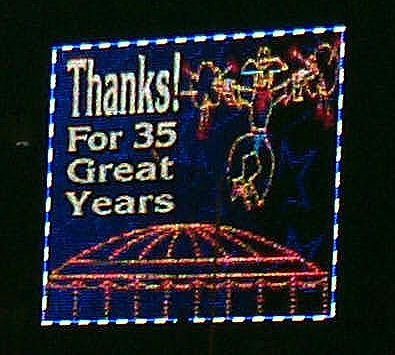 The sign says it all (c) Houston Astros |